Integrations that keep working when the other side misbehaves
We design unified APIs and resilient integration layers, with retries, idempotency, audit, and observability, so external systems become dependable, not fragile.
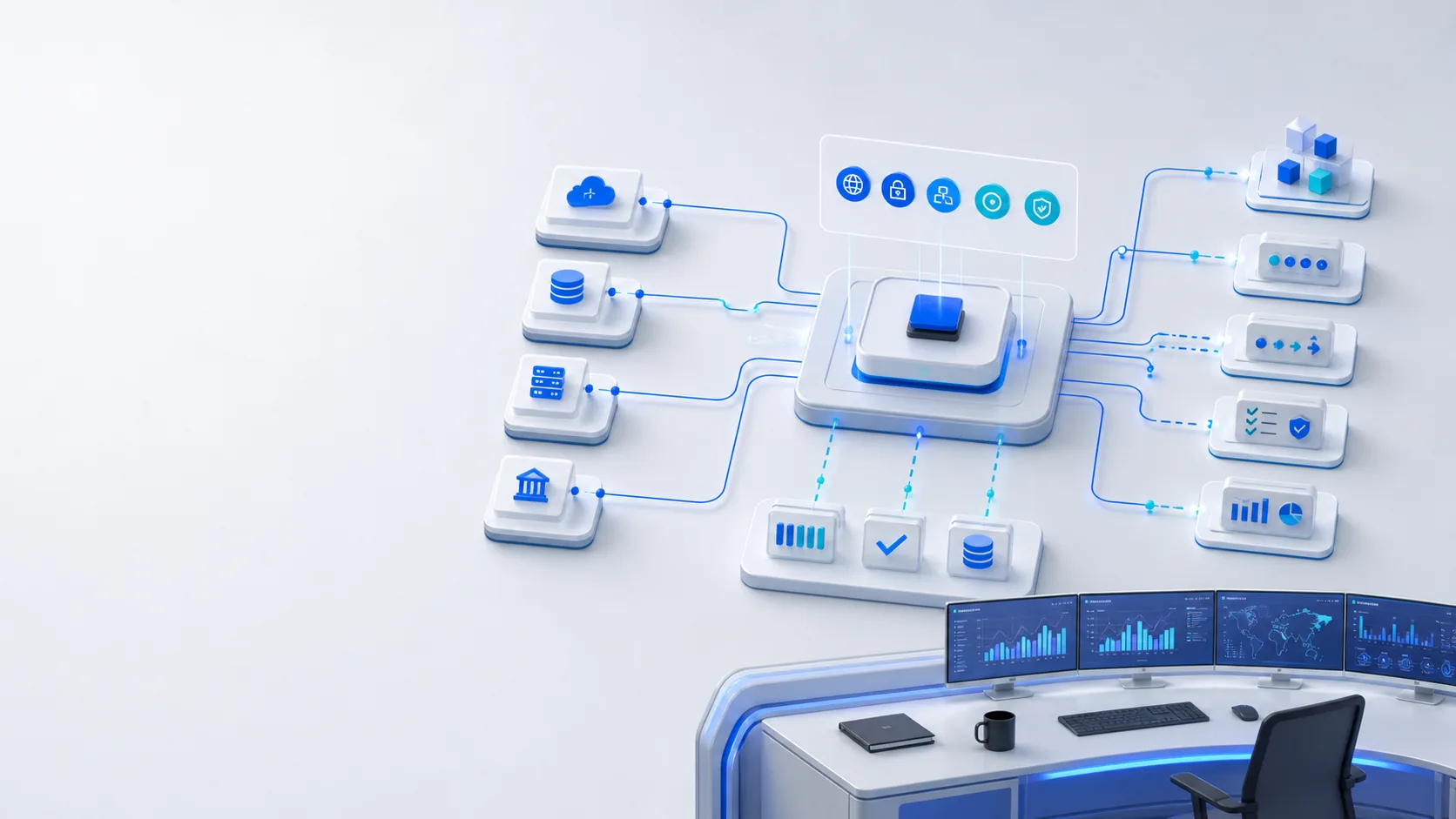
What we engineer
Unified API design
One coherent API surface over many systems, with clear contracts and versioning instead of scattered point-to-point calls.
Service agents and webhooks
Outbound and inbound integration via service agents, webhook pipelines, and resilient API clients generated from specs.
Resilience and auditability
Retries, idempotency, queues, dead-letter handling, and audit trails so failures are contained and explainable.
Treat integration as a first-class system
Most integration pain comes from treating it as glue. We treat it as a system with contracts, resilience policies, and observability. External systems fail, rate-limit, and change, so we design for that with retries, idempotency, and clear audit trails, and we make the whole flow visible.
What you get
A unified, versioned API
A coherent surface your teams can consume without learning every downstream system.
Resilient data flows
Retries, idempotency, and queues that absorb downstream failures gracefully.
Full auditability
Every integration event traceable, so support and compliance are not guesswork.
Engagement models
Enterprise Delivery Program
End-to-end implementation of SaaS, integration, modernization, or automation platforms with architecture-led delivery.
Typical scope
- Architecture and implementation team
- Backend, frontend, cloud, data, and QA
- Milestone-based delivery
- Documentation, UAT, launch, and handover
Integration Program
Design and implement production-grade integrations, unified APIs, service agents, webhooks, and data flows.
Typical scope
- CRM, payments, healthcare, marketing, and analytics
- REST, SOAP, GraphQL, events, and webhooks
- Retries, observability, and auditability
- API clients and runbooks
Related case studies
Frequently asked questions
Can you integrate legacy SOAP and modern REST together?
Yes. We routinely bridge SOAP, REST, GraphQL, events, and webhooks behind a single, well-documented API surface.
How do you handle unreliable third parties?
With retries, idempotency, queueing, and dead-letter handling, plus observability so you can see and recover from failures quickly.